
Narrative Analysis (Textual Research ) of The War Below and Blood Batteries
《战争之下》与《血电池》叙事比较分析

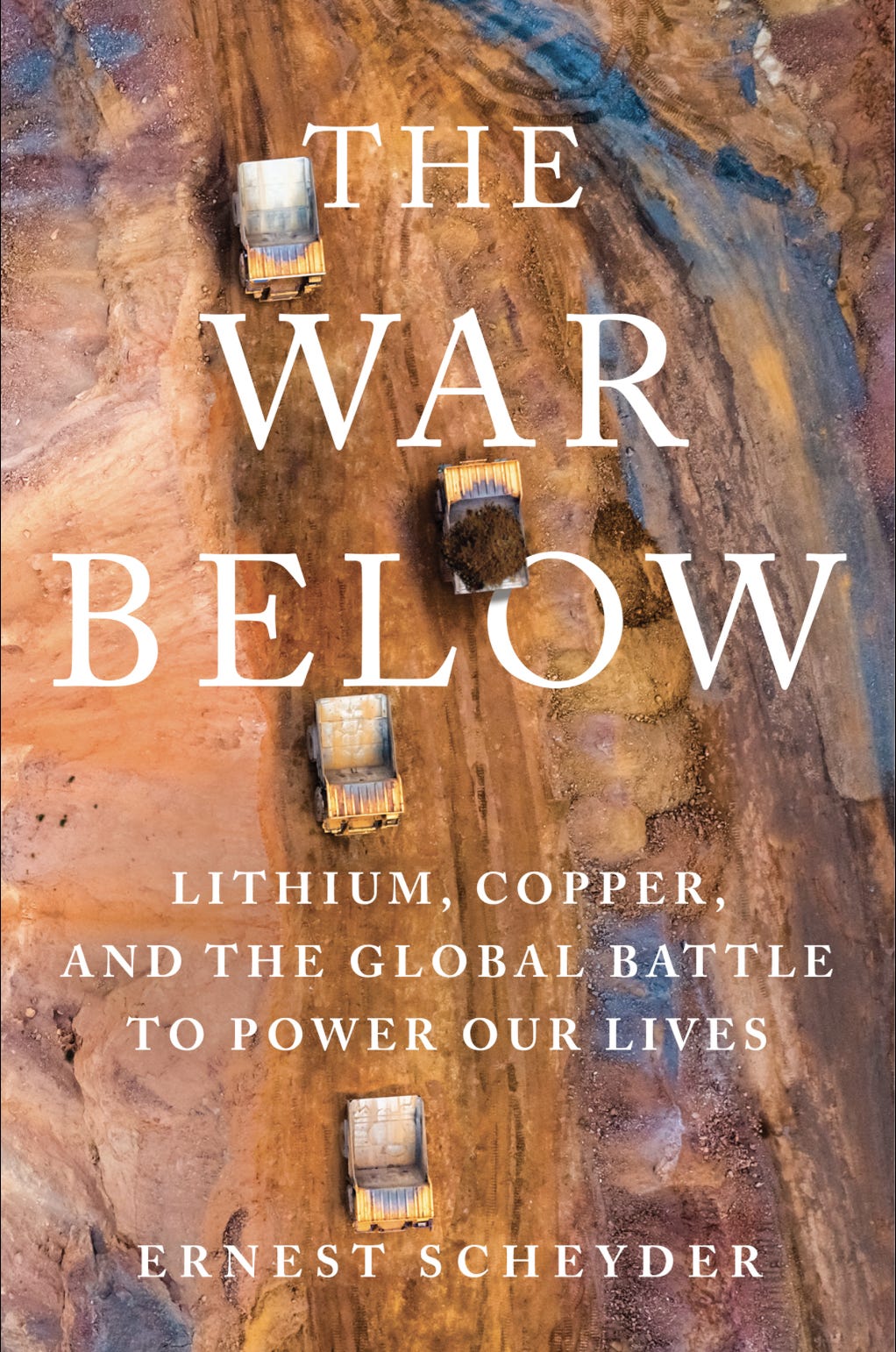
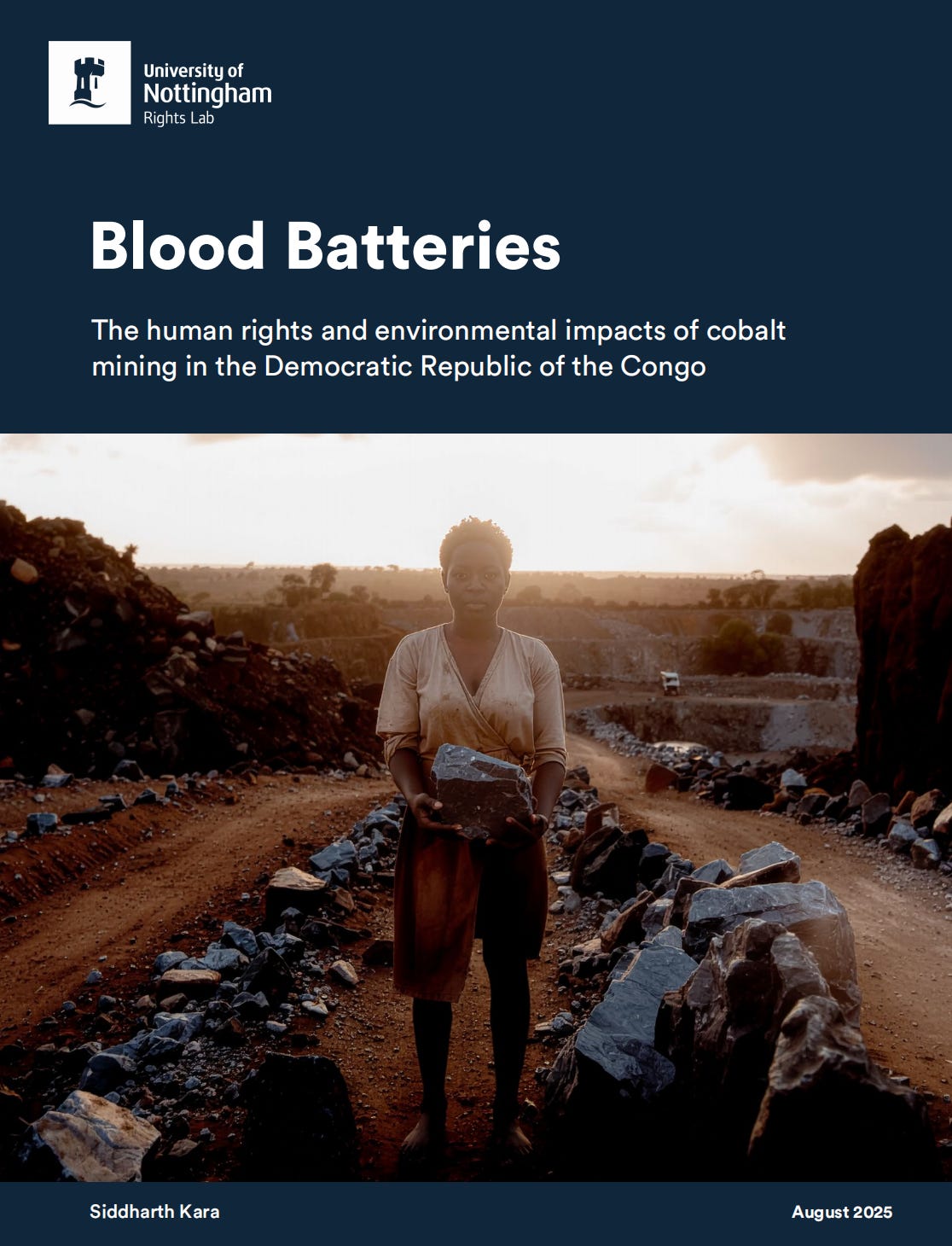
The War Below: Lithium, Copper, and the Global Battle to Power Our Lives by Ernest Scheyder and Blood Batteries: The Human Rights and Environmental Impacts of Cobalt Mining in the DRC by Siddharth Kara (2025) both examine the consequences of mining critical minerals for modern technology, yet they do so through markedly different narrative frameworks. Scheyder’s work is a journalistic narrative account that reads like an investigative journey, whereas Kara’s Blood Batteries is presented as a formal research report. This comparative review analyzes their storytelling construction in an academic manner, focusing on four key aspects: (1) Narrative Perspective, (2) Language Style and Tone, (3) Narrative Techniques, and (4) Macro-Structure and Organization. The analysis remains purely technical and structural, using examples and citations from the texts to illustrate how each author crafts their narrative, without opining on the moral or thematic content.
美国记者厄内斯特·谢德(Ernest Scheyder)的《战争之下:锂、铜与推动我们生活的全球之战》和西达尔特·卡拉(Siddharth Kara)2025年出版的《血电池:刚果(金)钴矿的人权与环境影响》都探讨了为现代科技开采关键矿产所带来的后果,但二者采用了截然不同的叙事框架。谢德的著作是一部新闻纪实风格的叙事作品,读来如同一次深入调查的旅程;相比之下,卡拉的《血电池》呈现为一份正式的学术研究报告。
本比较评述以学术视角分析两部作品的叙事构建,特别关注以下四个方面:(1)叙述视角,(2)语言风格与语调,(3)叙述技巧,(4)宏观结构与章节组织。分析严格集中于文本的结构与写作手法,通过引用两书中的实例来说明作者如何构筑各自的叙事风格,避免讨论作品的道德或主题评价。
Narrative Perspective(叙事视角)
Ernest Scheyder narrates The War Below in a first-person perspective intertwined with third-person reportage. As a journalist, he frequently places himself in the story, describing events through his own investigative lens. For example, Scheyder writes, “When I visited Tiehm in Reno in the summer of 2022, he wore white New Balance sneakers…” , indicating that the author is a character in the narrative. This first-person vantage point allows Scheyder to recount his direct experiences—such as site visits and interviews—giving the reader a sense of immediacy and personal engagement. At the same time, he shifts into third-person to relate historical background or contexts beyond his personal experience. This blended perspective (personal observer and omniscient reporter) enables a comprehensive view: the reader sees not only factual developments but also how the author encounters and interprets those developments. The result is an immersive narrative that remains grounded in Scheyder’s journalistic objectivity; he reports on others’ stories while acknowledging his role in uncovering them.
In contrast, Siddharth Kara’s Blood Batteries adopts a predominantly third-person, analytical perspective appropriate to its report format. Kara writes as an external researcher documenting conditions and data, so the narrative voice is formal and objective. The text speaks about findings and evidence without a personal “I” present in the storytelling of events. However, Kara does occasionally invoke the first person in a limited scope, primarily in sections discussing research methodology or the author’s intent. For instance, Kara notes the challenges of data collection: “Although I attempted to adopt a capture–recapture method for our estimates, the conditions proved too challenging…”. Here the use of “I” situates Kara as the researcher within the narrative of the research process, not as a character in an unfolding story. Similarly, in the executive summary he states “I hope that this new data will lead to more effective efforts to address the disheartening conditions uncovered during this project” , briefly revealing a personal stance. These first-person instances are not used to narrate events, but rather to clarify the researcher’s actions or hopes. Overall, Blood Batteries maintains a detached narrator perspective: the human experiences in the Congo are conveyed through interviews and data rather than through Kara’s personal journey, reflecting an academic observer’s point of view rather than a participant’s. This approach lends the report an authoritative tone, as Kara’s personal voice steps back to let facts and voices of respondents speak, aligning with his role as a documentarian of real-world data.
厄内斯特·谢德在《战争之下》中运用了第一人称与第三人称相结合的叙述视角。作为一名记者,他经常以第一人称介入叙事,从自身调查者的视角描述事件。例如,谢德写道:“2022年夏天我在里诺拜访蒂姆时,他穿着白色的新百伦运动鞋……”,表明作者以“我”的身份出现在故事中。这样的第一人称视角使谢德能够讲述自己的直接经历——如实地走访和访谈——为读者提供身临其境的现场感和个人参与感。同时,他也在需要时切换到第三人称,以叙述历史背景或超出其亲身经历的情境。这种个人观察者与全知记者相融合的视角使叙事更加全面:读者不仅看到客观的事实进展,也了解作者是如何发现并解读这些事件的。其效果是带来沉浸式的阅读体验,同时保有新闻报道的客观性;谢德在报道他人故事的同时,也承认自己在揭示这些故事过程中的角色。
相比之下,西达尔特·卡拉的《血电池》主要采用了第三人称的分析视角,这与其报告形式的体裁相契合。卡拉以外部研究者的身份记录状况和数据,叙事声音正式且客观。文本以第三人称陈述研究发现和证据,叙述事件时并不出现个人“我”。不过,在少数情况下,卡拉也会有限度地使用第一人称,主要出现在讨论研究方法或作者意图的段落中。例如,他在说明数据估算的困难时写道:“虽然我尝试采用捕获–再捕获方法来估算数据,但现场条件过于艰难…”。此处“我”的使用将卡拉置于研究过程中,但并非作为情节中活动的角色,而是说明研究工作本身的叙事。同样地,在执行摘要中他直言“我希望这些新数据将有助于更有效地应对本项目所揭示的令人沮丧的状况” ,短暂透露了个人的期望。这些第一人称的用法并非用于叙述故事情节,而是用于阐明研究者的行动或期许。总体而言,《血电池》保持了一个抽离的叙事视角:刚果的人的经历通过受访者的讲述和数据资料传达出来,而非通过作者的亲身见闻来呈现。这种处理方式反映了学术观察者的立场而非参与者的立场,赋予报告以权威性;卡拉的个人声音隐于幕后,让事实和受访者的声音来说话,符合其作为真实世界数据记录者的角色定位。
Language Style and Tone(语言风格与语调)
Scheyder’s language in The War Below is vivid, accessible, and at times evocative, blending journalistic clarity with literary detail. He often sets scenes with rich descriptions more typical of narrative non-fiction than straight news reporting. For instance, when narrating a field discovery in Nevada, Scheyder writes in a cinematic manner: “Tiehm… guided his burnt-orange–colored Chevrolet Blazer down a steep embankment of gravel barely recognizable as a road… Those barren hills of Nevada… were not forgiving… in the stygian dark. But that hint of light, flickering ahead of the dusk, beckoned Tiehm.”. This florid description (“stygian dark,” “hint of light… beckoned”) illustrates a dramatic and almost novelistic style that draws the reader into the physical setting. Despite these creative flourishes, the overall tone remains serious and fact-focused. Scheyder’s word choice and syntax aim for a balanced, reportorial voice—he does not use emotive or overtly biased language when describing conflicts, striving instead for a measured tone. The presence of data and technical details (often accompanied by footnotes in the text) further grounds his language in journalistic objectivity. In sum, Scheyder’s style is engaging yet objective: he uses compelling narrative prose to humanize complex geopolitical issues, but maintains a neutral, informative tone befitting an investigative reporter.
Kara’s language style in Blood Batteries is straightforward, formal, and expository, reflecting its nature as a research report. The prose is concise and fact-heavy, prioritizing clarity over artistic flair. Technical terms and statistics are frequently presented to substantiate points, and the sentences tend to be informational. For example, the executive summary methodically states facts such as “76% of the world’s supply of cobalt was mined in the southeastern provinces of the DRC… Kolwezi has become ground zero for the devastating impacts…” , without metaphor or adornment. The tone here is matter-of-fact and urgent. Throughout the report, Kara maintains a serious and sober tone appropriate to discussing human rights abuses. He occasionally employs emphatic or charged phrasing when conveying the gravity of the situation—for instance, highlighting “violent conditions” and that “Congolese voices… tell a very different story” in contrast to corporate assurances. Moreover, Kara’s authorial voice shows a moral urgency in lines like “Durable change… can only be achieved when the technology and EV giants… accept genuine responsibility”. Such statements, while delivered in a formal register, impart a clear advocacy angle. In general, however, the language avoids anecdotal embellishment; it stays formal and analytical. The tone is that of a concerned scholar-activist: factual and restrained in style, yet implicitly impassioned about the need for reform. This creates a starkly different reading experience from Scheyder’s narrative—Kara’s prose informs and argues more than it entertains, aligning with his goal to document and persuade on policy and ethical grounds.
谢德在《战争之下》中的语言生动易懂且颇具感染力,既有新闻报道的清晰,也带有一定的文学色彩。他常用丰富的描写来设置场景,其细节描绘更接近纪实文学而非纯粹的新闻写作。例如,在讲述内华达荒野中发现植物的场景时,谢德以电影般的笔触写道:“蒂姆驾驶着他那橙红色的雪佛兰越野车,小心地下坡,车轮碾过几乎看不出路迹的碎石… 内华达那片荒山毫不留情,在幽暗如冥河的黑夜中对人充满挑战。但前方暮色中摇曳的一丝亮光召唤着蒂姆。”。这些华丽的描述(如“幽暗如冥河的黑夜”,“亮光…召唤着蒂姆”)带有戏剧性,几乎具有小说的风格,将读者引入身临其境的实地场景。尽管不乏创造性的润色,整体语调仍保持严肃和以事实为本。谢德选择用词和句式时力求保持一种平衡的、报道式的声音——在描述冲突时他避免使用煽情或明显带有偏见的语言,而是追求克制冷静的基调。文本中大量数据和技术细节(往往在文中以脚注形式出现)也进一步使他的语言建立在新闻客观性的基础之上。总之,谢德的文体特点可以概括为引人入胜但客观:他运用引人入胜的叙事笔法使复杂的全球问题更加具象化,但同时保持了调查记者应有的中立和信息性语调。
卡拉的《血电池》的语言风格则直截了当、正式严谨,充分体现了研究报告的属性。行文简明扼要、以事实为主,明确性高于艺术表现。文本中频繁出现术语和统计数据,以支撑论点;句子多为资讯性的陈述。例如,执行摘要部分有条理地陈列事实,如“2024年全球76%的钴产自刚果(金)东南部省份… 科卢韦齐已成为这些破坏性影响的零地点” ,全无比喻或修饰。其语调在此是冷静而带有紧迫感的。在整篇报告中,卡拉始终保持严肃冷峻的语调来讨论人权侵害等沉重话题。当强调事态严重性时,他有时也会使用措辞强烈的表达——例如指出刚果矿区“暴力的开采环境”,以及“然而…来自当地的刚果声音讲述的是完全不同的故事”,用以对比企业所宣称的合规说辞。此外,卡拉的作者之声在某些句子中流露出道德紧迫感,例如“只有当位于钴供应链顶端的科技和电动汽车巨头切实承担责任时,持久的改变才能实现”。这些表述即便采用正式文体,亦清晰地传达了倡导变革的立场。总体而言,文本语言避免了琐事轶闻式的润色,保持学术性和分析性。报告的语调如同一位关切议题的学者—行动者:风格上以事实和理性为主,字里行间又隐含对改革的热忱。这种语言运用使阅读体验与谢德的叙事大不相同——卡拉的行文更注重传达信息和论证说理,而非娱乐性,与其记录事实、促成改变的目标相一致。
Narrative Techniques(叙事技巧)
In The War Below, Scheyder employs an array of narrative techniques drawn from storytelling and long-form journalism. One prominent technique is opening chapters with immersive anecdotes or dialogues that hook the reader. For example, Chapter One begins in medias res with a piece of dialogue: “YOU SHOULD MEET JAMES CALAWAY.” — a suggestion from a colleague that immediately places the author in a narrative scene. This technique of starting with a direct quote thrusts the reader straight into an ongoing conversation, creating intrigue about the context. Similarly, Chapter Two opens by transporting the reader to a historical moment (“Less than ten years after the U.S. Civil War ended…” ), a flashback that provides backstory for the contemporary conflict over sacred land. Scheyder frequently uses such scene-setting openings to frame each chapter’s central issue. Throughout the book, he integrates personal interviews and dialogues as narrative elements. Real people involved in the mining conflicts speak in their own words, which Scheyder quotes within the story—for instance, miners, executives, or local activists share their perspectives in quoted speech, enriching the narrative with multiple voices. Another technique is the use of evocative epigraphs or references: Chapter Three, for example, opens with a line from the film Blood Diamond (“You sell blood diamonds, too.”) to draw a thematic parallel. By weaving together first-hand storytelling, historical context, and thematic references, Scheyder’s narrative technique creates a tapestry of interconnected stories. The narrative pacing often follows a case-study approach—each chapter presents a mini-narrative (with its own rising tension and resolution) within the broader saga of the global mineral race. This journalistic narrative style, rich with dialogue and descriptive scenes, engages readers emotionally while delivering factual reportage.
Kara’s Blood Batteries, being a report, uses narrative techniques more sparingly, but it still incorporates certain storytelling elements to humanize the data. Notably, Kara begins his report with a powerful human voice: the very first lines of the executive summary feature a direct quotation from a Congolese mother, “Cobalt is a curse. It is killing Congolese people.”. This serves a similar hooking function as Scheyder’s anecdotal chapter openings, immediately grounding the reader in the real human stakes behind the research. The quotation is presented as an epigraph that encapsulates the tragic theme of the report. Throughout the document, Kara includes personal testimonies and vignettes to complement the quantitative findings. For example, when describing conditions in artisanal mining communities, he might relate that “one mother who lost her son to a tunnel collapse explained, ‘The day my son died, I died’”. Such narrative anecdotes, delivered via interview excerpts, bring an emotional dimension to the otherwise formal analysis. Kara’s use of narrative is thus mostly through illustrative examples rather than sustained storytelling: brief narratives are embedded as case points. Additionally, Kara employs rhetorical contrast as a technique—for instance, juxtaposing corporate claims with the “voices from the ground” to highlight discrepancies , which is a narrative strategy to create tension between different perspectives. The structure of the prose remains report-like (with numbered sections and factual exposition), so techniques like foreshadowing or chronological plot are not applicable as they are in Scheyder’s book. Instead, Kara’s report utilizes anecdotal evidence and direct quotations as its chief narrative devices. These techniques ensure the report is not purely abstract or statistical; they remind the reader of the human narrative behind each data point. In summary, while Kara’s narrative techniques are subtler and subordinate to analysis, they play a crucial role in reinforcing the report’s message by connecting empirical findings to personal stories and ethical questions.
在《战争之下》中,谢德运用了多种叙事技巧,借鉴了故事讲述和长篇新闻特写的手法。其中一个突出的技巧是以引人入胜的轶事或对话作为章节开头,迅速吸引读者注意。例如,第一章以一种正在进行的对话开场:“你应该去见见詹姆斯·卡拉威。”——这是同事给作者的建议。这种以直接引语开场的方式,将读者立刻带入对话情境中,激发对背景情况的好奇心。类似地,第二章开篇将读者带回历史场景(“美国南北战争结束不到十年…” ),通过闪回手法为当代关于圣地的矿产争端提供背景。谢德经常运用这种场景式开头来框定每章的核心议题。在全书中,他将个人访谈和对话巧妙融入叙事之中。卷入矿产争端的真实人物用自己的话发声,谢德在故事中直接引用这些原话——例如矿工、公司高管或当地活动家的引言 ——使叙事因多元的声音而更加丰富。另外一个技巧是运用富有寓意的引言或文献引用:例如第三章开头引用了电影《血钻》中的一句台词“你卖的也是血钻。”作为章节引言 ,以此巧妙地建立主题类比。通过交织第一手故事、历史背景和主题化引用,谢德的叙事技巧编织出一个相互关联的故事网络。其叙事节奏往往遵循案例研究式的展开——每一章都呈现一个小型叙事(具有自身的矛盾冲突和解决过程),共同构成关于全球矿产争夺的宏大图景。这种充满对话和细节场景的新闻叙事风格在传递事实报道的同时,引发读者的情感共鸣。
卡拉的《血电池》作为一份报告,在叙事技巧方面相对克制。然而它仍运用了一些故事元素使数据更具人情味。值得注意的是,卡拉在报告开头就引入了一个有力的人声:执行摘要的第一行就是一位刚果母亲的直接引述:“你想知道钴吗?钴是一个诅咒。它正在杀害刚果人民。”。这一做法类似于谢德用轶事开篇的技巧,立即将读者置于研究背后的真人处境中。这句引言作为点题的警示,浓缩了报告悲剧性的主题。在整份报告中,卡拉加入了个人证言和片段式的小故事来佐证数量化的研究结果。例如,在描述手工采矿社区的情况时,他会举例提到:“一位在坑道坍塌中失去儿子的母亲解释道:‘儿子死的那天,我也死了’”。这些叙述性片段通过受访者的话语呈现,为本来正式的分析增添了情感维度。由此可见,卡拉的叙事运用主要体现在作为示例的简短故事插入,而非贯穿全篇的持续性叙事。此外,卡拉运用了对比的修辞手法——例如将公司宣称的说法与“当地的声音”并列,对照之下突出其反差 ——这是一种通过不同观点制造张力的叙事策略。由于报告的行文依然是条理清晰的分析体(包含编号章节和事实阐述),因此不太适用诸如铺垫悬念或按时间推进情节等小说化技巧。取而代之的是,卡拉主要借助轶事证据和直接引语来达到叙事效果。这些技巧确保报告不至于流于抽象或纯统计数据,它们提醒读者,每一个数据背后都有真人故事和道德命题。综上所述,尽管卡拉的叙事技巧更为含蓄且服务于分析,但通过将实证结果与个人故事、伦理关切相关联,这些技巧对强化报告主旨起到了关键作用。
Macro-Structure and Organization(宏观结构与章节组织)
Scheyder structures The War Below as a multi-chapter narrative, each chapter functioning as a focused case study in the broader tapestry of the clean energy mineral rush. The book comprises fifteen chapters, each with an evocative title and theme. For example, Chapter One is entitled “A Choice,” and Chapter Two “Sacred Space,” signaling the specific dilemma or concept explored in each. In practice, each chapter centers on a particular conflict or locale – such as a showdown between conservation and lithium mining in Nevada, or a clash between indigenous land rights and copper extraction in Arizona – and Scheyder tells that story in depth. This thematic organization means the narrative moves location to location (and sometimes mineral to mineral), but always ties back to the overarching question of balancing resource needs with human and environmental costs. The chapters are generally arranged to gradually expand the scope: from local American disputes to global contexts (eventually touching on international supply chains and geopolitical implications). Despite the episodic nature of chapters, there is a continuity in Scheyder’s investigative journey; for instance, insights gained in one chapter (like the stakes of protecting a rare wildflower vs. mining lithium) echo and inform the discussions in later chapters. Scheyder also interlaces follow-ups – a later chapter might return to an earlier story’s developments, giving the book a sense of progression. The macro-structure is thus episodic yet cohesive. By the end, the reader has traversed a series of interconnected narratives that collectively illuminate the “war” over subterranean resources. This organizational approach reflects a narrative arc typical of expansive journalistic works: initial ground-level stories build toward a comprehensive understanding of the global battle for critical minerals.
Meanwhile, Blood Batteries is organized in a classical report format, with a clear and logical sectioned structure. The document opens with front matter (lists of abbreviations, tables, etc.), followed by an Executive Summary that encapsulates the main findings and significance. After that, Kara provides an “Overview of Research” (covering ethics, objectives, methods) , establishing how the study was conducted. The core of the report is divided into numbered sections addressing different dimensions of the topic in a systematic order. For example, one section covers the context of the Democratic Republic of Congo (history, national context), another outlines the cobalt market and supply chain, and subsequent sections present the research results (labor survey outcomes, environmental analyses) in detail. These results sections are further broken down by region or subject – Kara itemizes findings by province (Lualaba, Haut-Katanga) and by analytical category (e.g., artisanal mining survey results, geospatial analysis, water sample analysis) for clarity. Finally, the report culminates in Section 12: “Recommendations,” which is subdivided by stakeholder (technology companies, mining companies, government, etc.) , followed by appendices and endnotes. This report-style macro-structure facilitates a step-by-step understanding: readers are first given background, then data and analysis, and lastly solutions or recommendations. Each section is numbered and titled, allowing for easy navigation of the document. The organization underscores the academic and professional nature of the work – it reads like a comprehensive field study report. There is no single narrative arc as in Scheyder’s book; instead, the through-line is the research inquiry itself. The coherence comes from the systematic exploration of the research questions, building from context to evidence to conclusions. Kara’s structured approach ensures that the complex issue of “blood batteries” is broken down into digestible, logically progressing parts, which is effective for informing policy and scholarly audiences.
谢德将《战争之下》构架为多章节的叙事,每一章都是清洁能源矿产热潮这一宏大主题下的一个重点案例研究。全书共十五章,每章都有一个意味深长的标题和主题。例如,第一章题为“抉择”(A Choice),第二章为“圣地”(Sacred Space),从标题即可看出每章所探讨的特定困境或概念。实际而言,每章都围绕一个特定的冲突或地点展开——例如内华达州保护稀有植物与开采锂矿的冲突,或亚利桑那州土著圣地与铜矿开采的矛盾——谢德在该章中对这一故事进行了深入讲述。这种主题式的组织方式意味着叙事随着章节在地理地点上不断转换(有时矿种也不同),但始终围绕着如何权衡资源需求与人文环境代价这一主线问题。各章节大体按照范围从本地逐步扩展到全球的顺序安排(书中后期涉及国际供应链和地缘政治影响)。尽管每章相对独立成篇,但谢德调查旅程的连续性贯穿其中;例如,在早期章节中获得的见解(如保护珍稀野花与开采锂矿的取舍)会在后续章节的讨论中产生呼应和影响。谢德也会在后面的章节中对之前提到的故事进行后续跟进,使全书呈现出一定的发展脉络。因此其宏观结构是分散而统一的:读者最终经历了一系列相互关联的故事,这些故事共同揭示了围绕地下资源展开的“战争”。这种组织方法体现了大型新闻作品典型的叙事弧线:由初始的基层故事逐渐累积,最终勾勒出对关键矿产全球争夺战的全面认知。
相比之下,《血电池》的结构采用经典报告格式,具有清晰、逻辑严谨的分节结构。报告正文前有前置内容(缩略语、图表清单等),随后是执行摘要,概述主要发现和意义。紧接着,卡拉提供了“研究概览”部分(包含伦理审批、研究目标、方法等) ,说明研究是如何开展的。报告主体被划分为按编号排列的章节,每一章节系统地讨论主题的不同方面。比如,有一节介绍刚果民主共和国的背景(国家概况和简史),另一节概述钴的市场和供应链,随后的若干章节详细呈现研究结果(如劳动力调查结果、环境分析等)。这些结果章节根据区域或专题进一步细分——卡拉按省(如卢阿拉巴省、上加丹加省)以及分析类别(如手工采矿调查结果、地理空间分析、水样分析)逐一列出发现,以确保条理清晰。最后,报告在第12节“建议”中总结提出对策,按利益相关方(科技公司、矿业公司、政府等)分列具体建议,之后附有附录和尾注。这种报告体例的宏观结构便于读者逐步理解:先提供背景,再给出数据和分析,最后提出解决方案或建议。每个部分都有编号和标题,方便检索。这样的组织方式凸显了作品的学术性和专业性——通篇读来如同一份详尽的实地研究报告。其整体并无类似谢德著作那样的单一叙事弧线;贯穿始终的是研究主题本身。报告的一致性来源于对研究问题的系统性探索,从背景铺陈到证据论证再到结论建议步步深入。卡拉这种结构化的方法确保了“血电池”这一复杂议题被拆解成易于理解、逻辑递进的部分,对于政策制定者和学术读者而言,这种组织方式能够有效传递信息。

In conclusion, Ernest Scheyder’s The War Below and Siddharth Kara’s Blood Batteries exemplify two distinct approaches to narrative construction, each suited to their authors’ objectives and genres. Scheyder’s book uses a first-person journalistic perspective, a descriptive and engaging style, and storytelling techniques that weave personal and historical narratives into a cohesive journey. Its chapter-based structure presents a series of compelling stories that collectively illuminate the complexities of mineral extraction in a narrative arc. Kara’s report, on the other hand, employs a more detached research perspective, a formal and data-driven tone, and selective narrative elements (like testimonies) to support its analysis. Its organization is rigorously systematic, breaking down the subject into clear sections from context to findings to recommendations. Neither work is merely telling a story nor merely listing facts; each blends narrative and exposition in different proportions. Analytically, Scheyder’s narrative choices immerse the reader in on-the-ground dilemmas, while Kara’s structure and tone lend authority and clarity to an urgent real-world issue. Both approaches effectively convey their content, but through differing narrative lenses – one through the craft of story and reportage, the other through the framework of scholarly reporting – highlighting how narrative perspective, style, technique, and structure shape the reader’s understanding of the subject matter.
总而言之,厄内斯特·谢德的《战争之下》和西达尔特·卡拉的《血电池》在叙事构建上体现了截然不同的路径,各自契合了作者的写作目的和作品体裁。谢德的作品采用第一人称的新闻纪实视角,语言风格生动引人入胜,运用丰富的叙述技巧将个人经历和历史背景交织成一个连贯的调查旅程。其章节结构通过一系列引人共鸣的故事逐步揭示矿产开采的复杂性,形成清晰的叙事脉络。相较之下,卡拉的报告则以较为抽离的研究者视角切入,语调正式且以数据为支撑,并辅以精选的叙事元素(如证言)来服务于分析。其组织方式严谨系统,从背景、发现到建议将主题明晰地拆解。两部作品都不只是简单地讲故事或罗列事实;它们各自以不同的比例融合了叙事性和说明性。通过分析可以看出,谢德的叙事选择使读者身临其境地直面矿产争端一线的抉择,而卡拉的结构和语调则为这一紧迫的现实问题提供了权威且清晰的阐释。两种方式都有效地传达了内容,但透过不同的叙事视角来实现——一个通过故事和报道的技艺,另一个通过学术报告的框架——这凸显了叙事视角、语言风格、叙事技巧和宏观结构如何塑造读者对主题的理解。